First contact
I first learned about Nyavini through a friend who regularly visits the village. He and his community group, Xpose, were running a meaningful outreach project aimed at providing school stationery and sanitary pads to young people in the area.
As President of the Rotaract Club of Johannesburg, I found the initiative both inspiring and aligned with our values of service and community upliftment. Without hesitation, I decided to join the journey, representing my organisation and contributing to a cause that sought to make a tangible difference in the lives of young people in Nyavini.
My very first encounter with Nyavini was virtual. During one of our inception meetings, a short video (available in the link below) was played to give us an overview of the area. That video not only strengthened my motivation to support the planned initiative, but also ignited in me a strong desire to visit Nyavini in person and experience the community firsthand.
https://youtu.be/DDneIwsQjxI?si=yQetDr77OssQDf9r
Since then, we have successfully implemented a few other projects in support of the community. Yet, despite our ongoing involvement, I always carried a personal aspiration to one day travel to Nyavini myself , to move beyond the screen and connect directly with the people and the place that had already left such a strong impression on me.
The trip to Nyavini
We departed from Johannesburg, Sandton at 10:00 PM, embarking on what would become a long but memorable journey. Our first stop was in Pietermaritzburg, in the KwaZulu-Natal Province, where we picked up additional members involved in the project. From there, we continued past Durban before making our next stop in Margate, still within KwaZulu-Natal, to collect some of the equipment required for our social outreach activity.
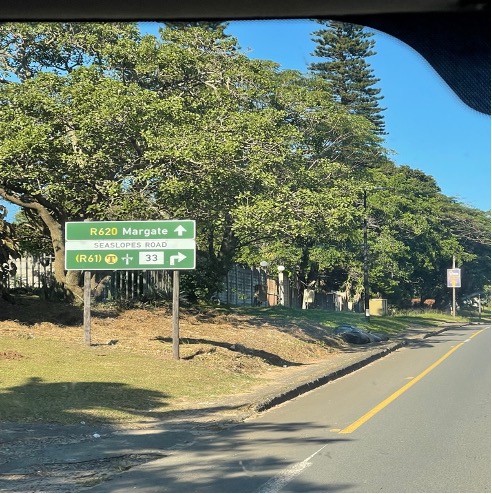
On the way to Margate
The final stop before heading directly toward Nyavini was in the town of Bizana. There, we took a short break and prepared ourselves for the next stretch of the journey, leaving behind the tarred road for gravel terrain.
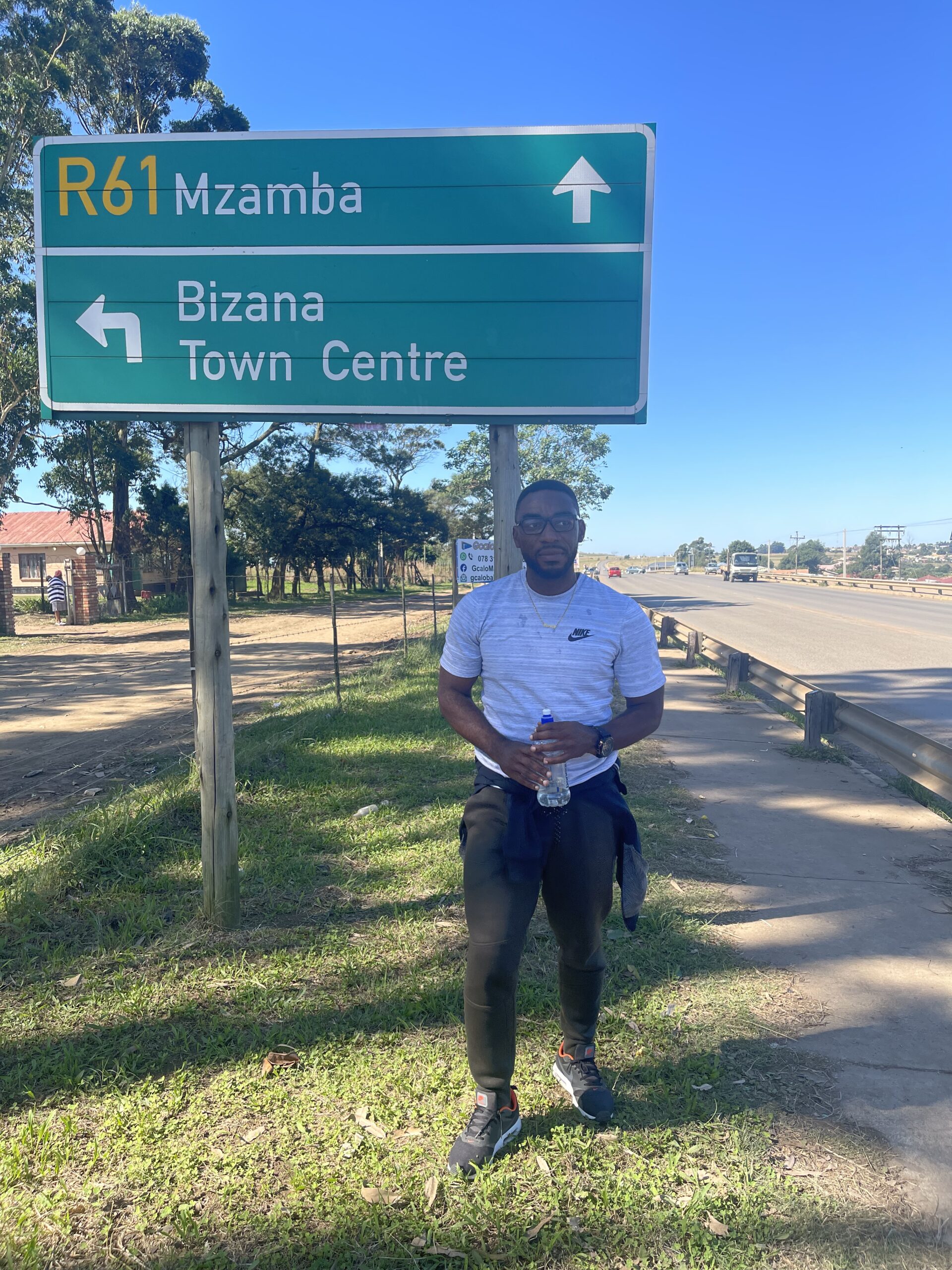
The stop at Bizana before embarking to the gravel road
The drive along the gravel road presented several challenges. In some sections, the vehicle could only move at a speed of 10 to 20 km/h. At certain points, the car even got stuck, forcing us to pause and navigate our way through carefully. Despite these obstacles, we persevered and eventually arrived at our destination around 7:00 PM the following day after departure, a total journey of approximately 21 hours. It is worth noting, however, that the extended travel time was largely due to the multiple stops we made and the duration of those breaks.
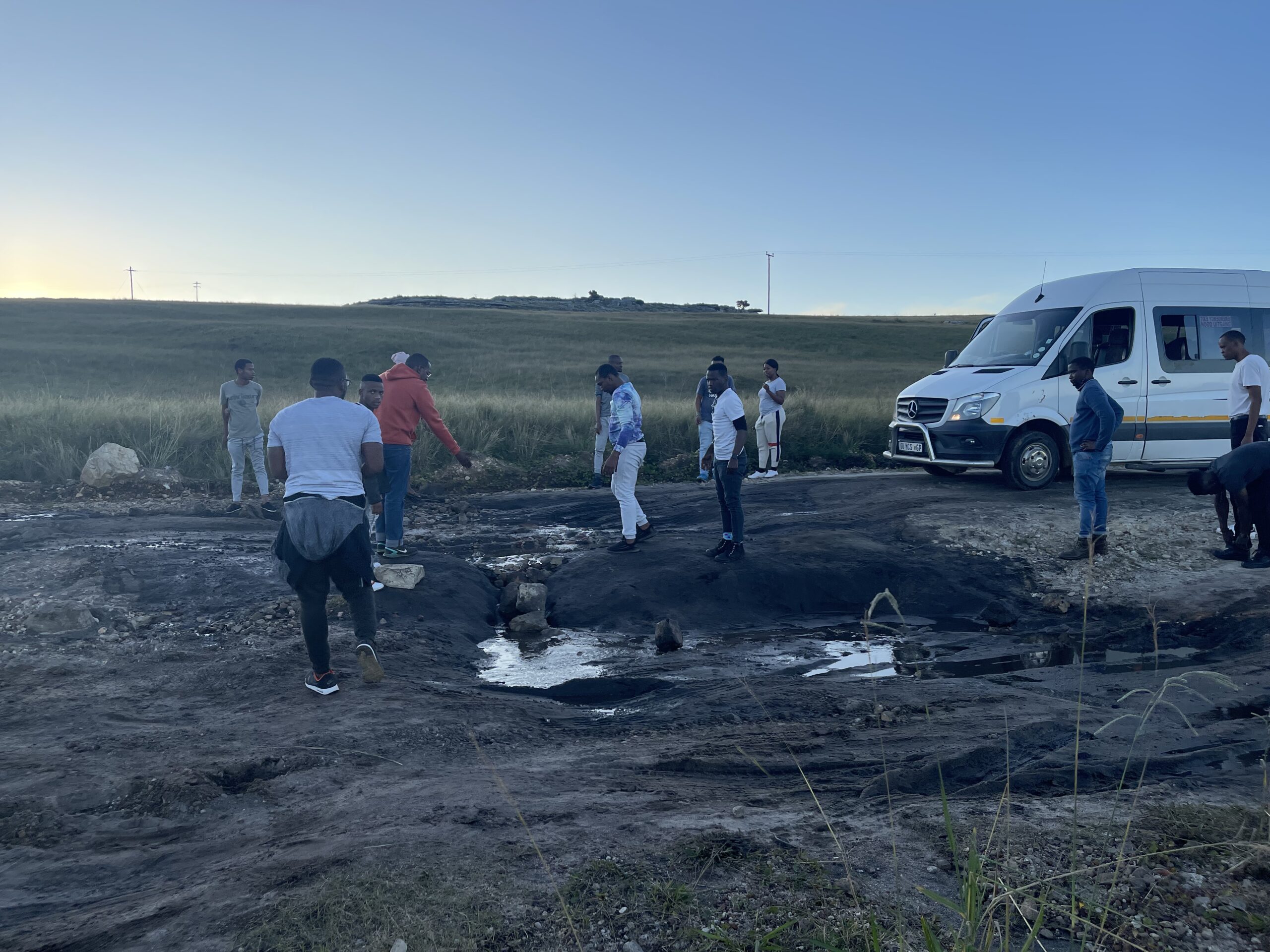
Car stuck on the way to Nyavini
A second trip was later undertaken under improved coordination. This time, the journey took significantly less time, about 16 hours in total including approximately three hours spent in Bizana town.
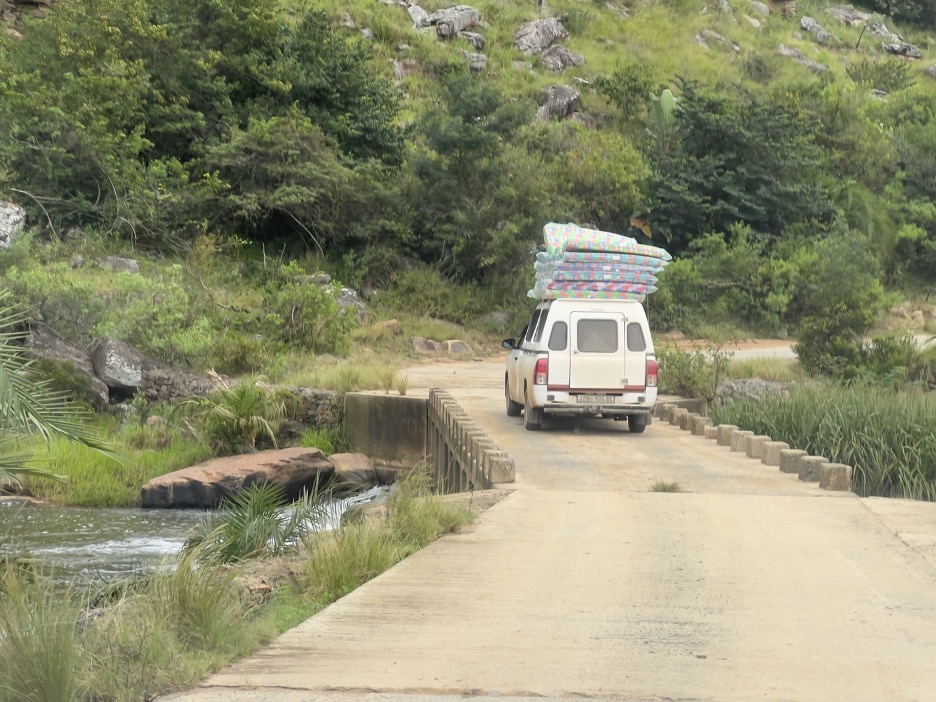
Second trip to Nyavini
About Nyavini
Located almost at the border between the KwaZulu Natal and the Eastern Cape provinces of South Africa, but mostly in the Eastern Cape side, along the Indian Ocean and close to the Mtentu river. Nyavini, also referred to as Pondoland, is a traditional village that is part of the Bizana municipality.
One of the most striking particularities of Nyavini is how little known it is. Even some residents of the nearest well-known town, Bizana, are not fully aware of its exact location or extent. This invisibility extends to the digital space. When conducting an internet search, Nyavini is sometimes referred to as a region within KwaZulu-Natal Province. In other instances, when it is linked to the Eastern Cape, it is often described as an inland area around Bizana, without any reference to the Indian Ocean coastline.
However, through careful consultation with members of the local community, we were able to gain clarity. They confirmed that Nyavini indeed stretches all the way to the Indian Ocean and that the specific coastal area where we were located is genuinely known as Nyavini.
In addition, Nyavini is a place where electricity, internet connectivity, and network coverage remain very limited, encouraging people to focus more on human connection and the surrounding natural environment.
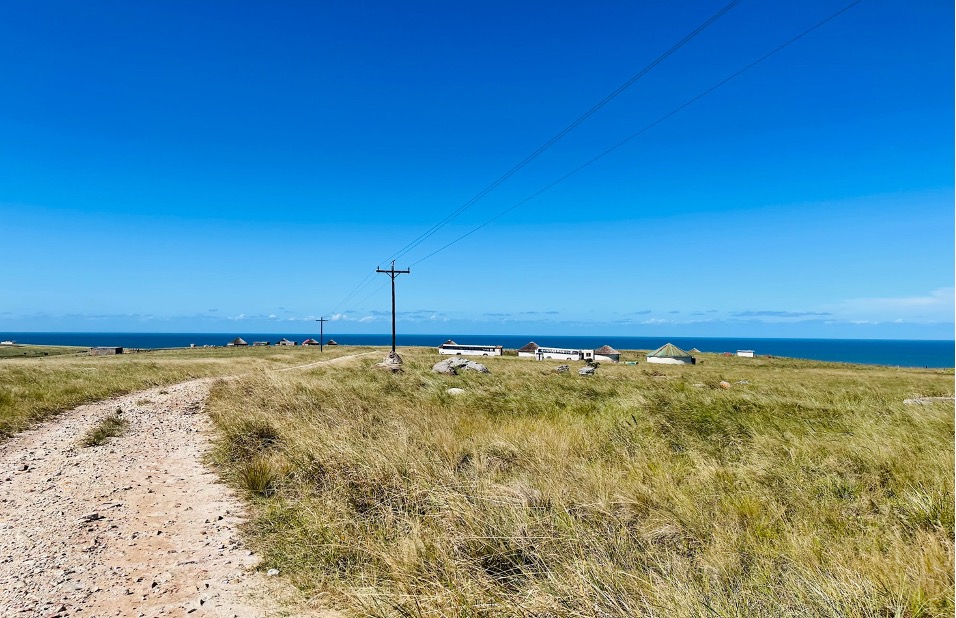
Landscape view of Nyavini
Despite its limited recognition and digital ambiguity, Nyavini holds remarkable potential to emerge as a distinctive tourism destination. Its untouched environment, dramatic coastal scenery, and rich natural assets position it as a hidden treasure waiting to be responsibly developed and sustainably promoted.
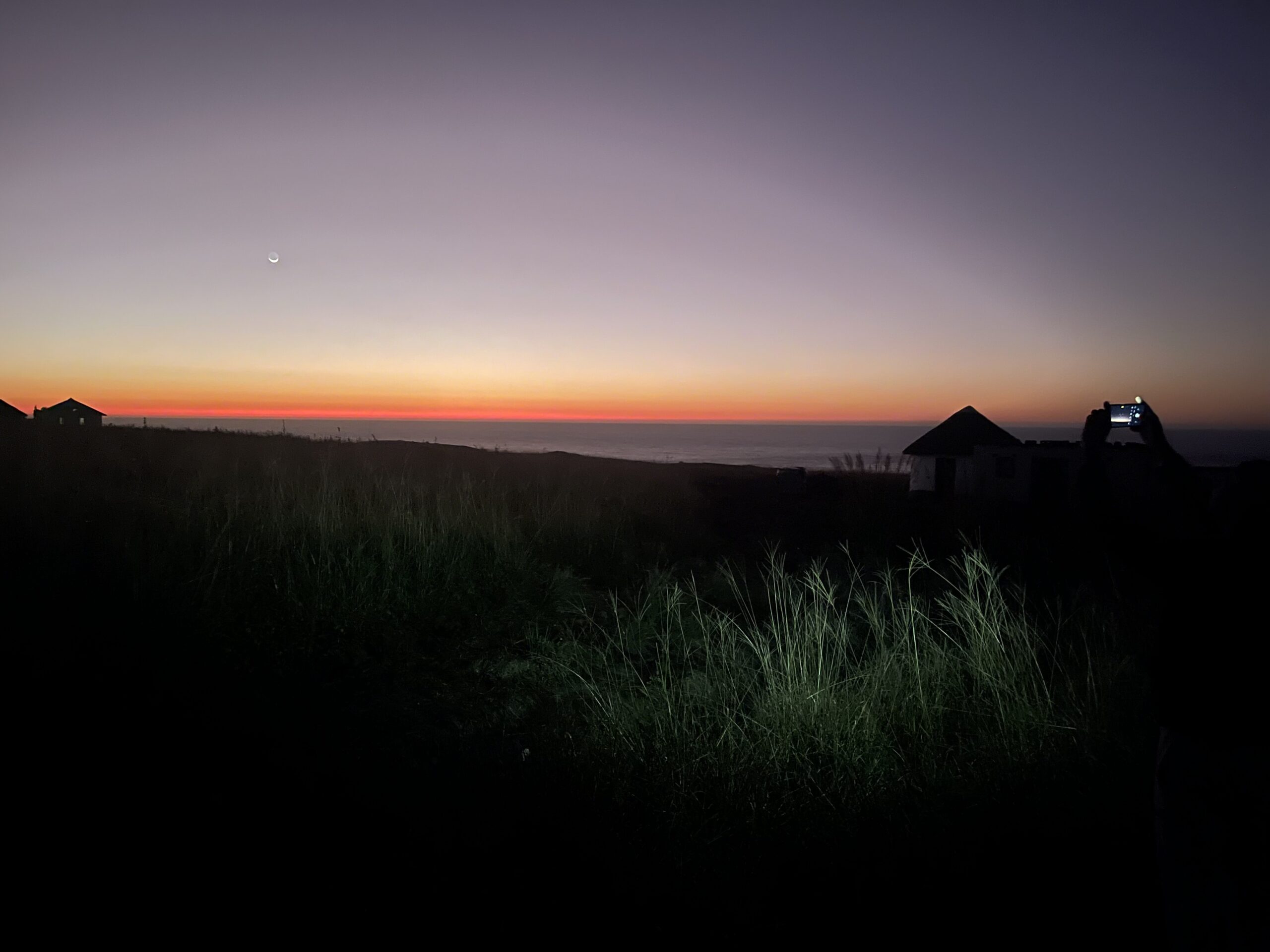
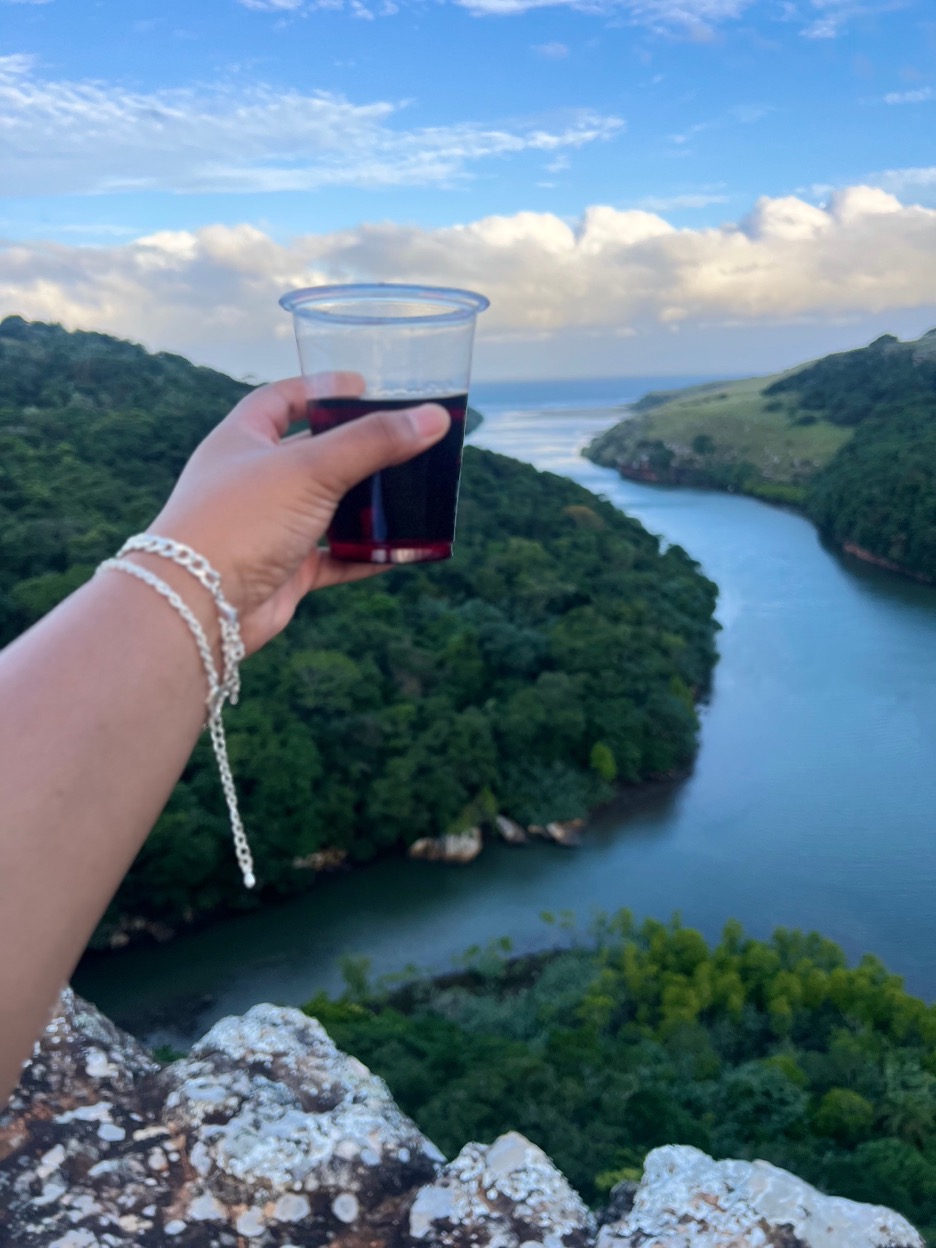
Dawn view of Nyavini (Photo taken at 5AM)
Nyavini ecotourism assets
Nyavini holds both cultural and natural wealth that characterise the charm of the location.
Cultural asset
Nyavini is a typical Xhosa village, particularly reflecting the heritage of the Pondo people. The settlement is characterised by vast, open spaces where small, round houses, often arranged in triangular homestead formations, stand far apart from one another. These houses are traditionally built with brick and covered with thatched roofs, blending harmoniously with the surrounding landscape.
The spacing between homesteads not only reflects rural settlement patterns but also reinforces a sense of privacy, land connection, and cultural continuity. The architectural style and layout of the village offer an authentic glimpse into Pondo cultural identity, making Nyavini not only a place of natural beauty but also of rich heritage value.
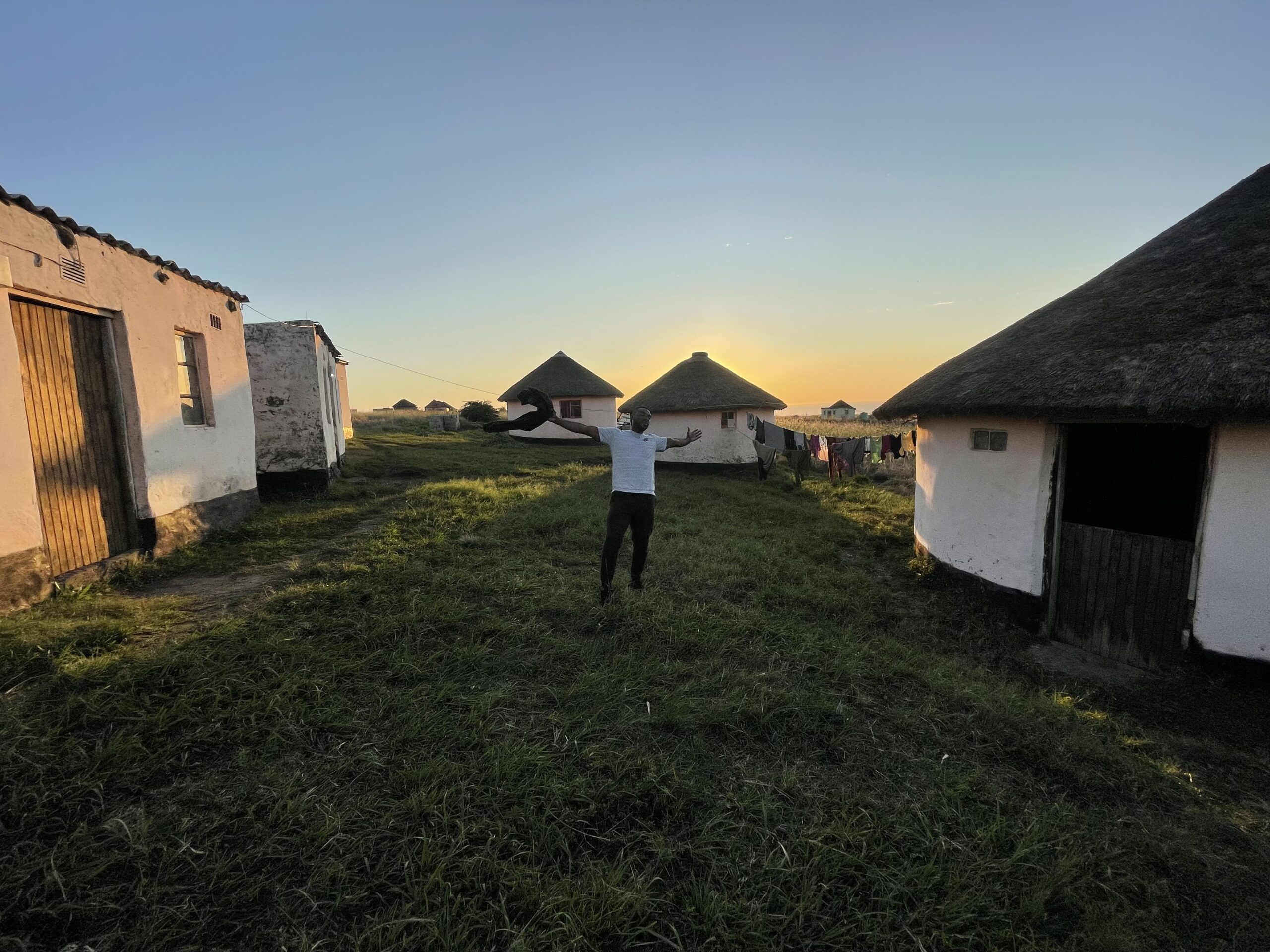
Houses style in Nyavini
The Pondo culture is widely known for its strong roots in subsistence agriculture and cattle farming. Livestock, particularly cattle, play a central role not only in sustaining household livelihoods but also in symbolising wealth, status, and social standing within the community. Beyond their economic value, cattle hold deep cultural significance, especially in the practice of lobola (bridewealth), where they form an essential part of marriage negotiations and the strengthening of family bonds.

Livestock in Nyavini
TAKE YOUR BREATH, THE BEST IS YET TO COME
Natural assets
Nyavini is blessed with a remarkable mosaic of natural features. The landscape is shaped by diverse water streams that weave through the terrain, alongside striking geological formations. Rolling mountains rise in the distance, while stretches of savannah blend seamlessly with pockets of small forests, creating a rich and varied ecological setting.
This diversity of natural elements not only enhances the scenic beauty of Nyavini but also strengthens its potential as a destination for eco-tourism, hiking, nature exploration, and conservation-focused initiatives. The following are the natural features found in Nyavini.
Indian Ocean
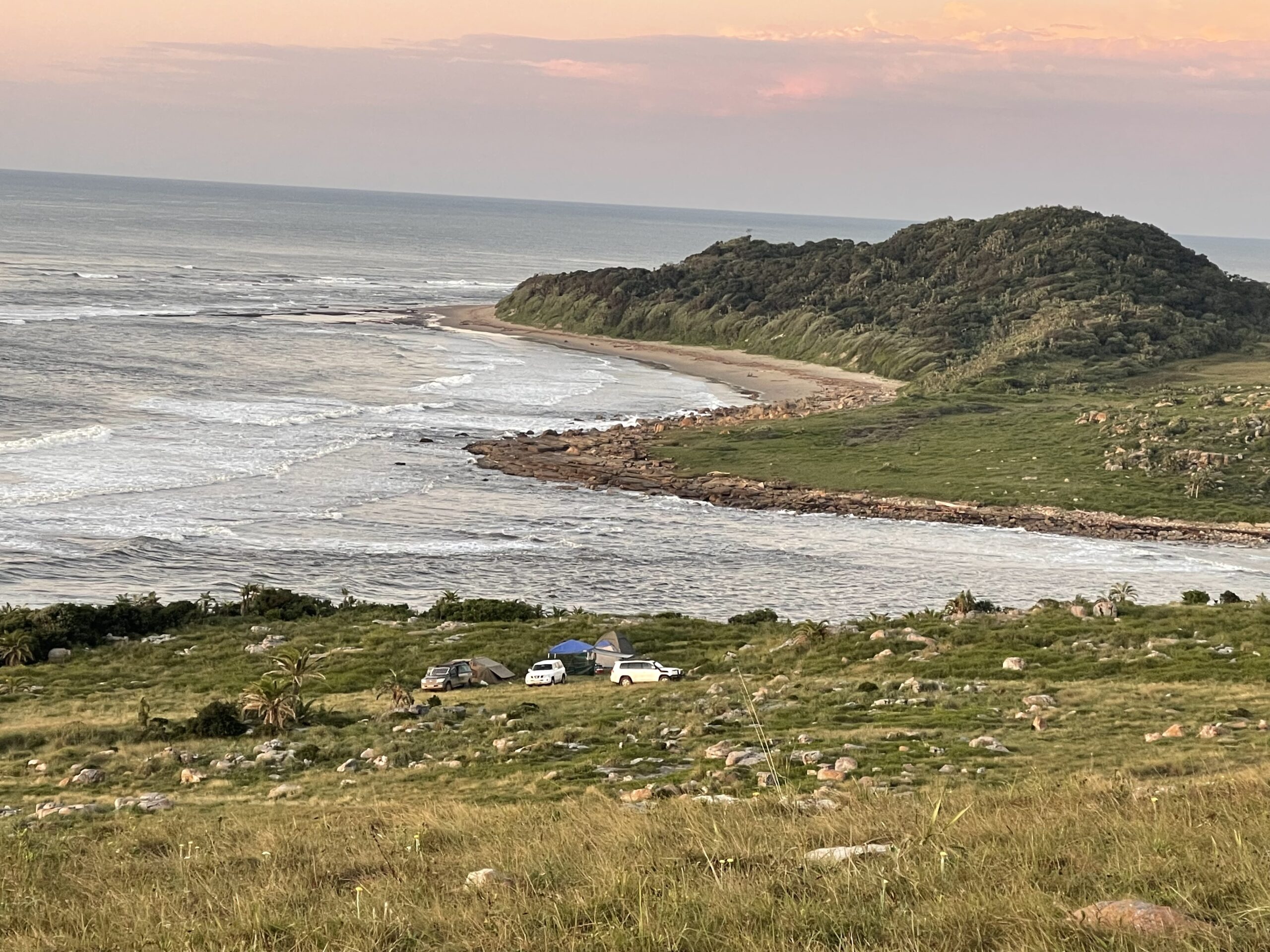
Costal view of the Indian ocean , mosaic of savannah and forest
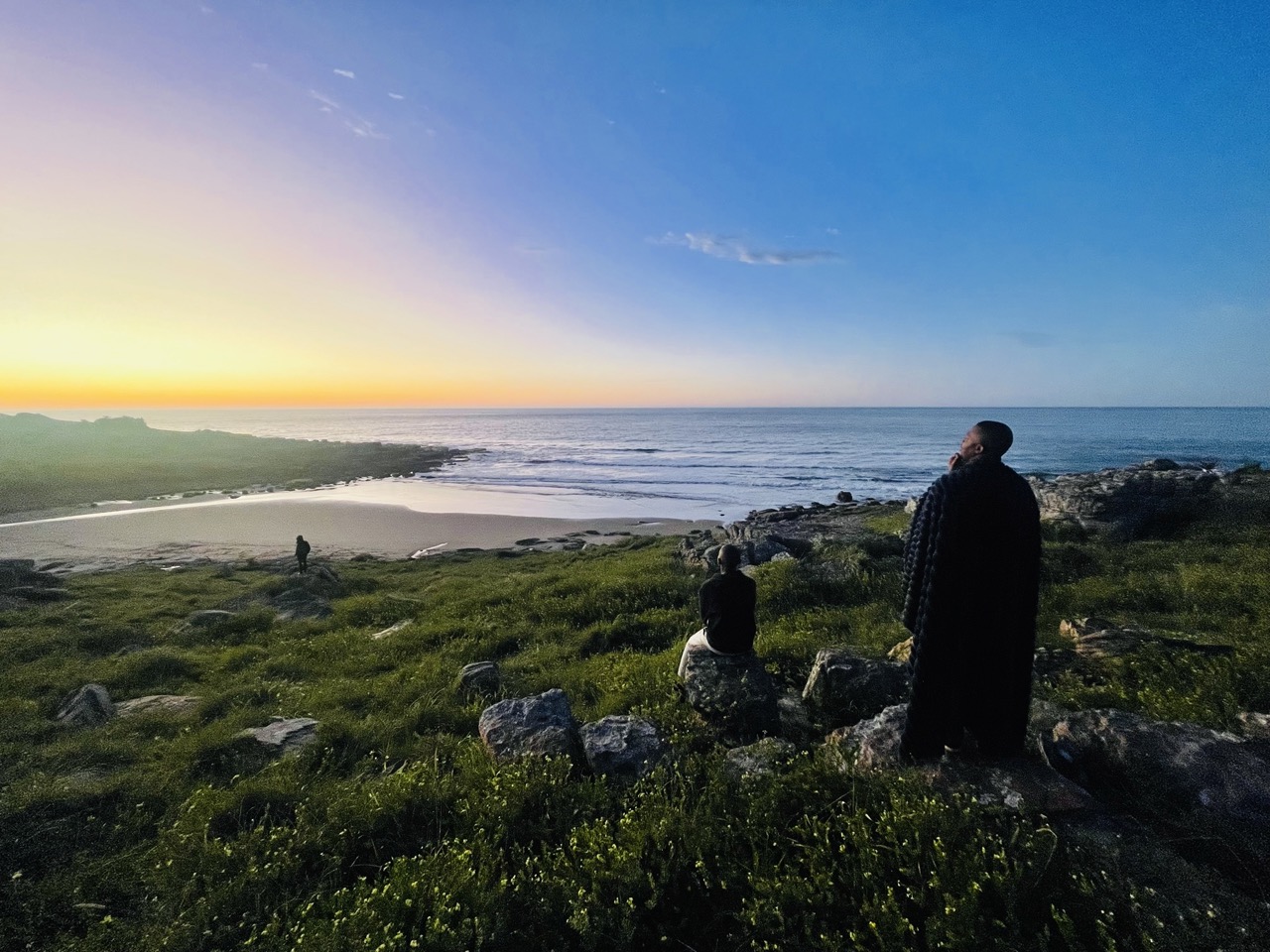
Costal view of the Indian Ocean at 6AM in Autumn
Rivers
The most well-known river in Nyavini is the Mtentu River. However, throughout our journey across the area, we encountered several additional rivers and water streams flowing through different locations. Further geographical verification would be required to determine whether all these waterways originate from the Mtentu River or whether they form part of distinct hydrological systems within the region
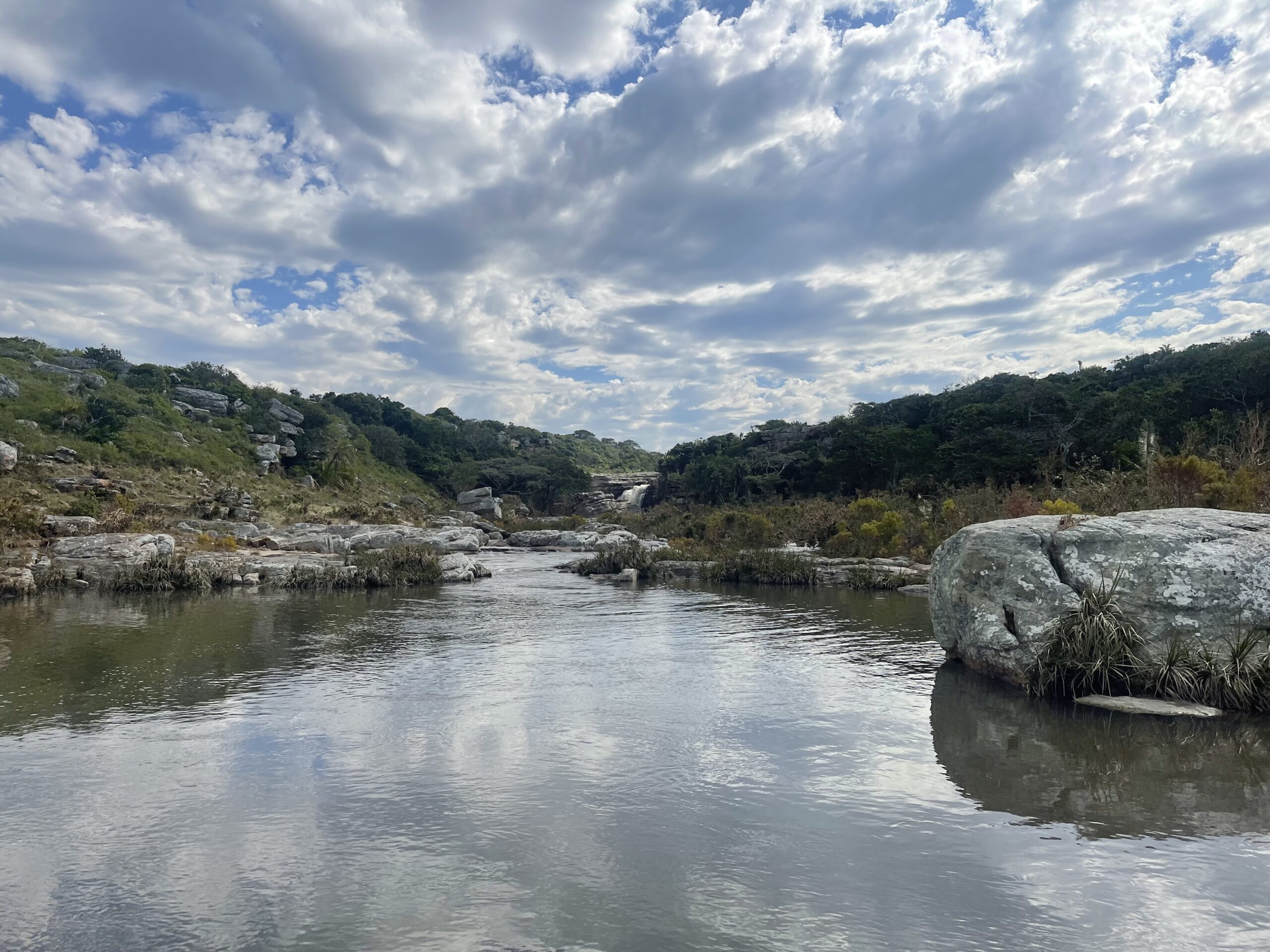
One of the rivers in Nyavini
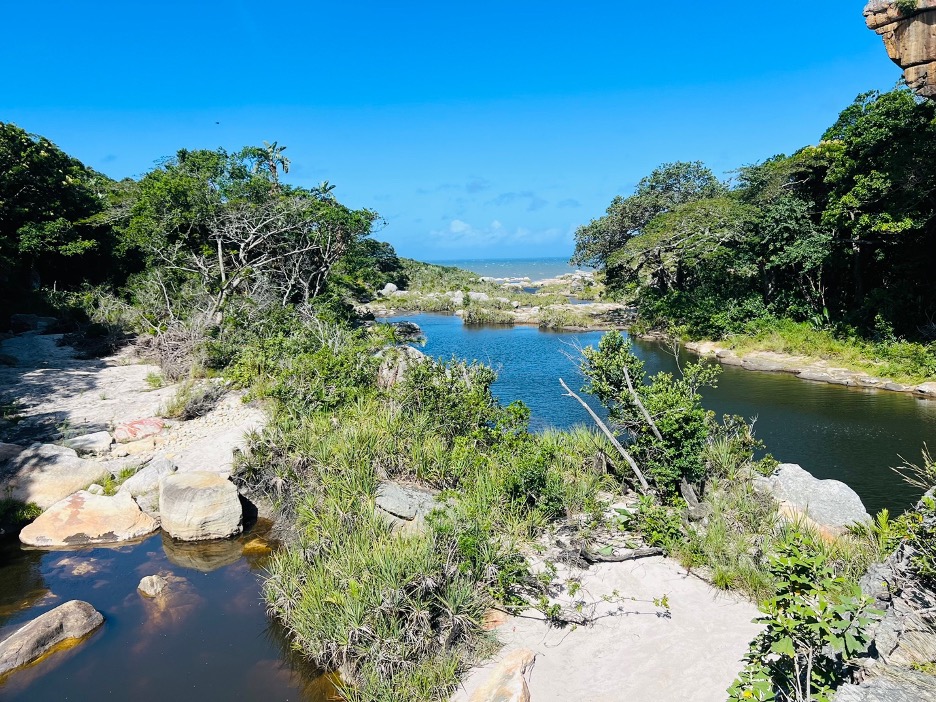
River in Nyavini
Estuary
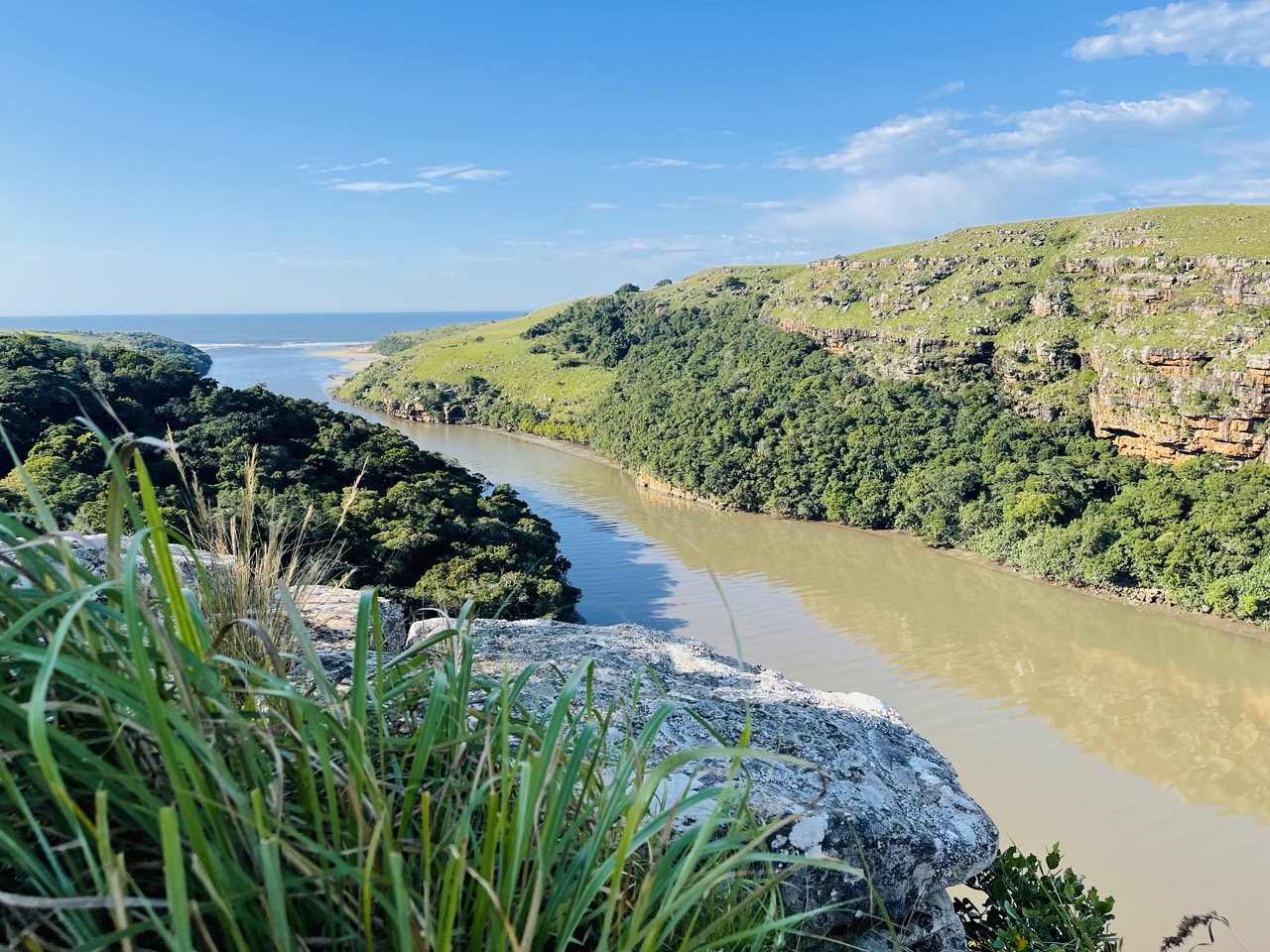
Mtentu river meeting up with the Indian ocean in Autumn
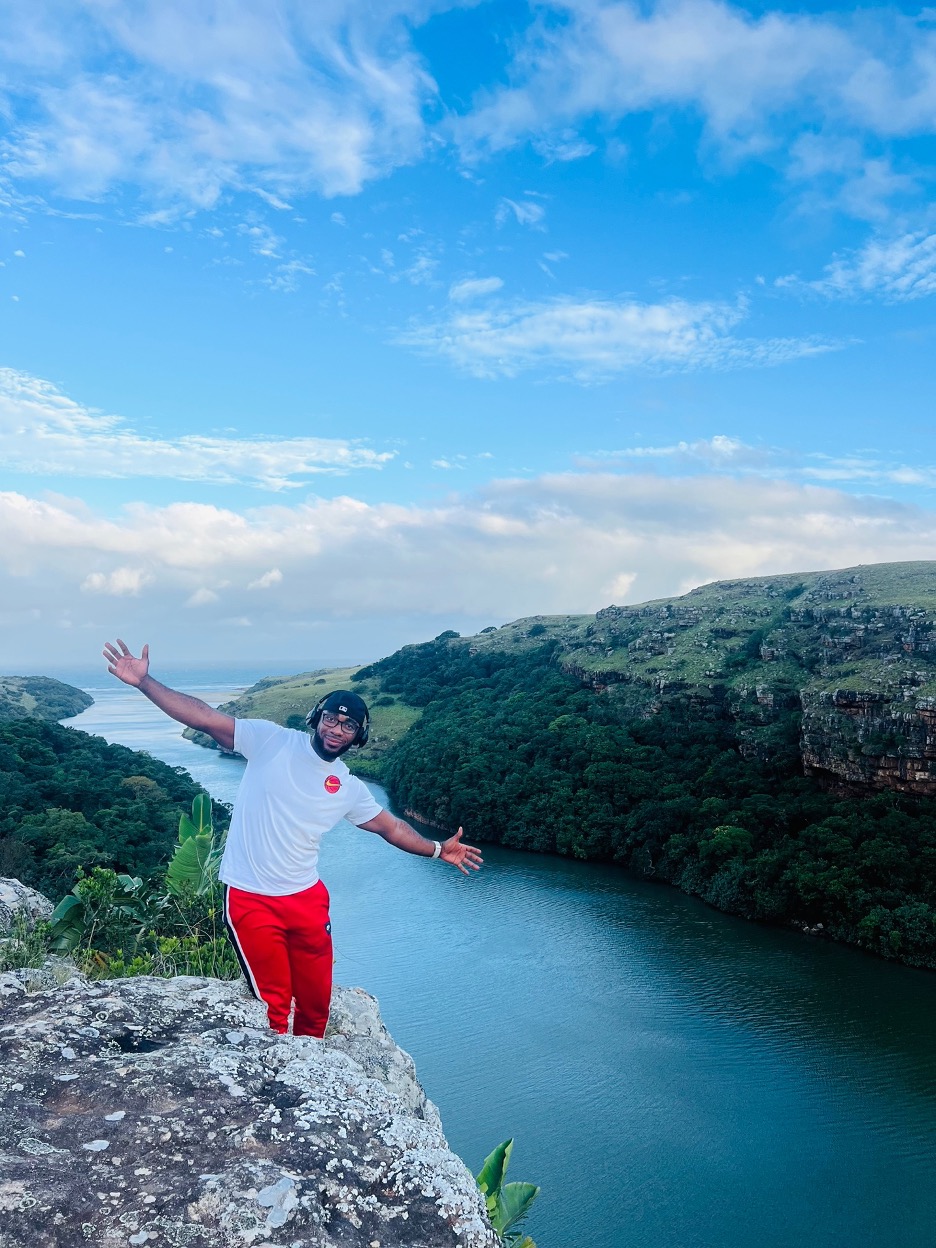
Mtentu River meeting up with the Indian Ocean in Summer
Waterfalls
Nyavini is also distinguished by its abundance of waterfalls. During our stay, we were able to identify approximately six different waterfalls scattered across the area, each with its own unique character and setting. However, local residents informed us that there are even more waterfalls hidden within the broader landscape, some of which remain largely unexplored. This richness in natural water features further reinforces Nyavini’s exceptional eco-tourism potential.
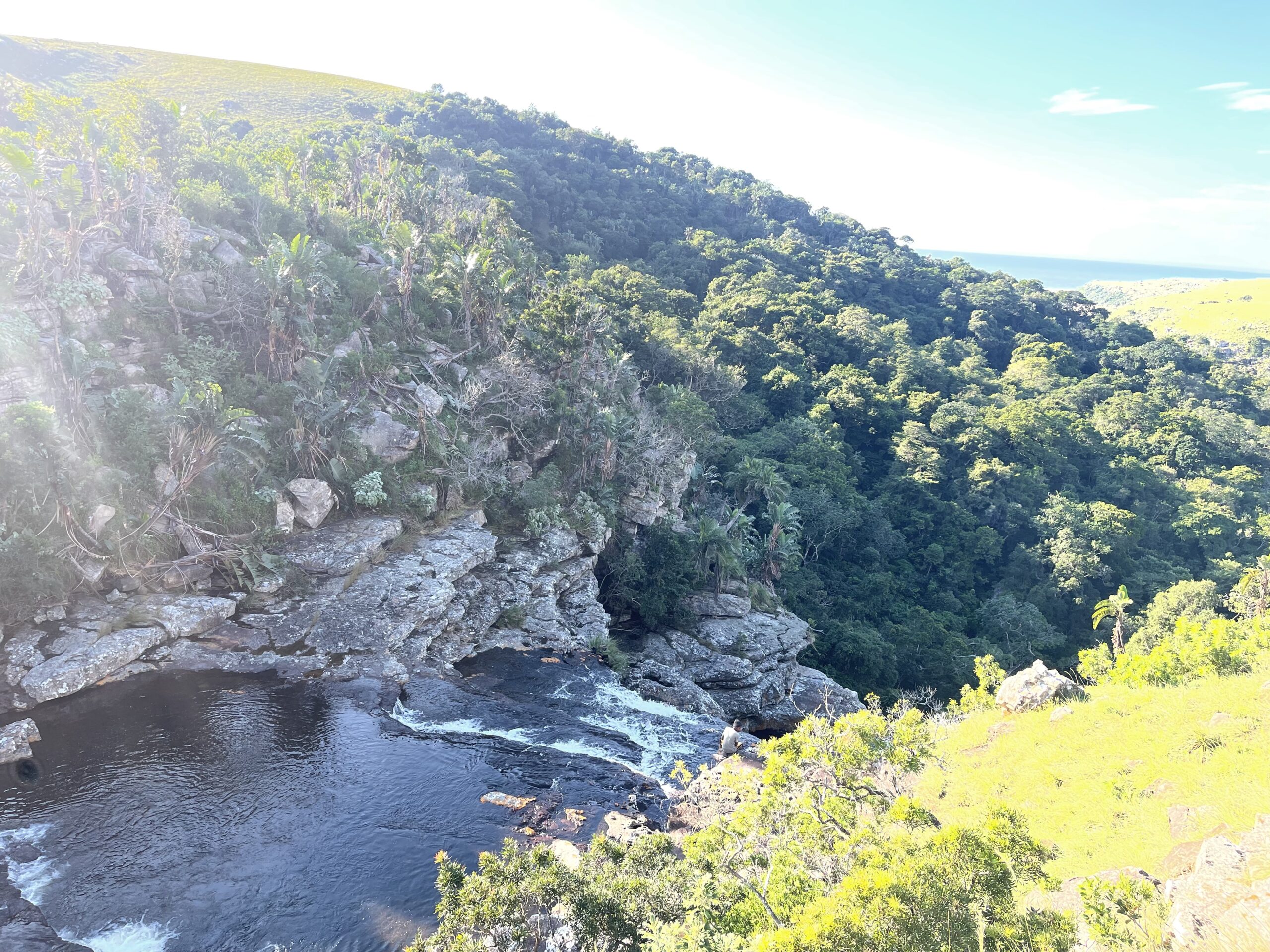
Waterfall in Nyavini
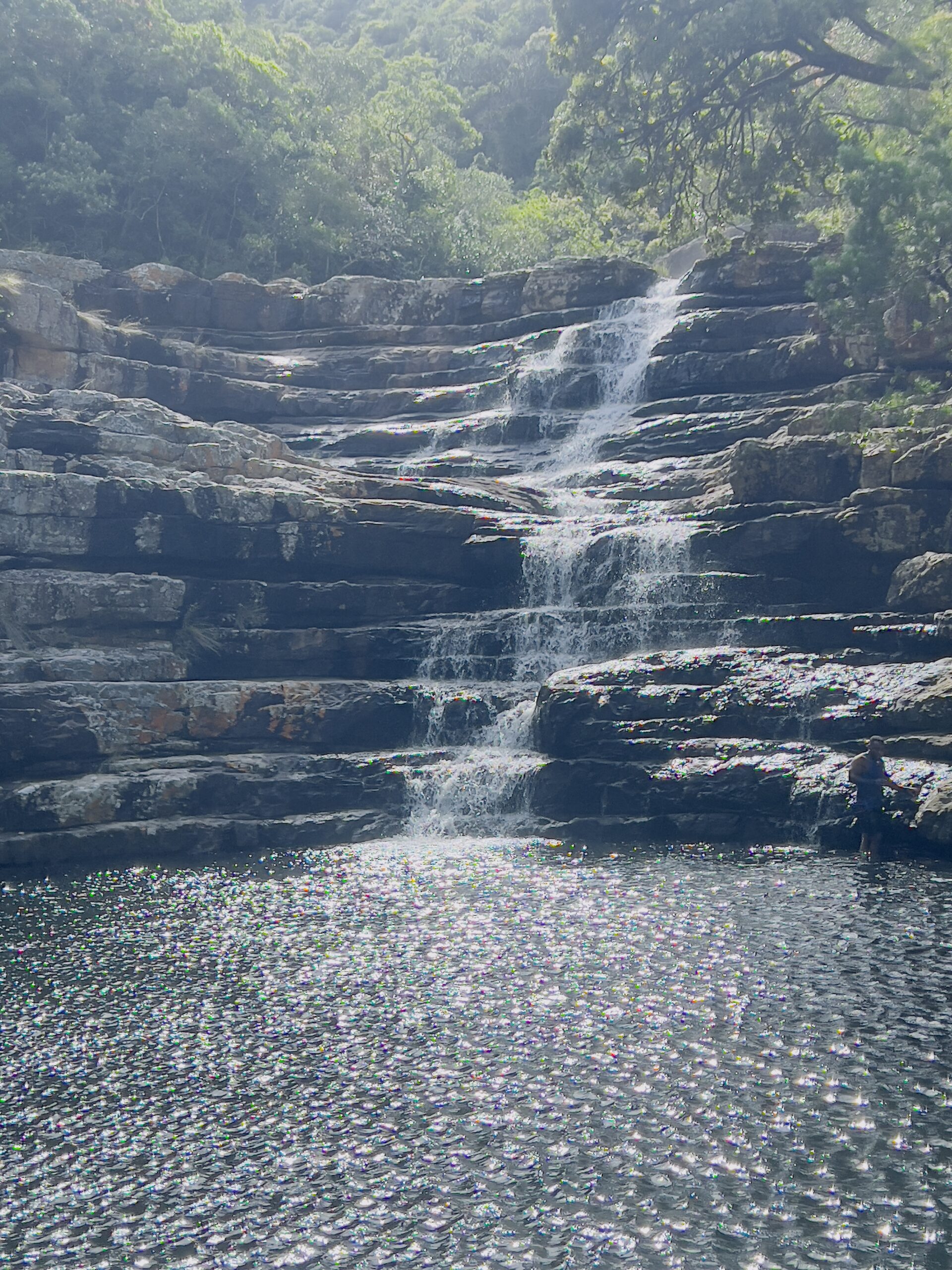
Waterfall in Nyavini
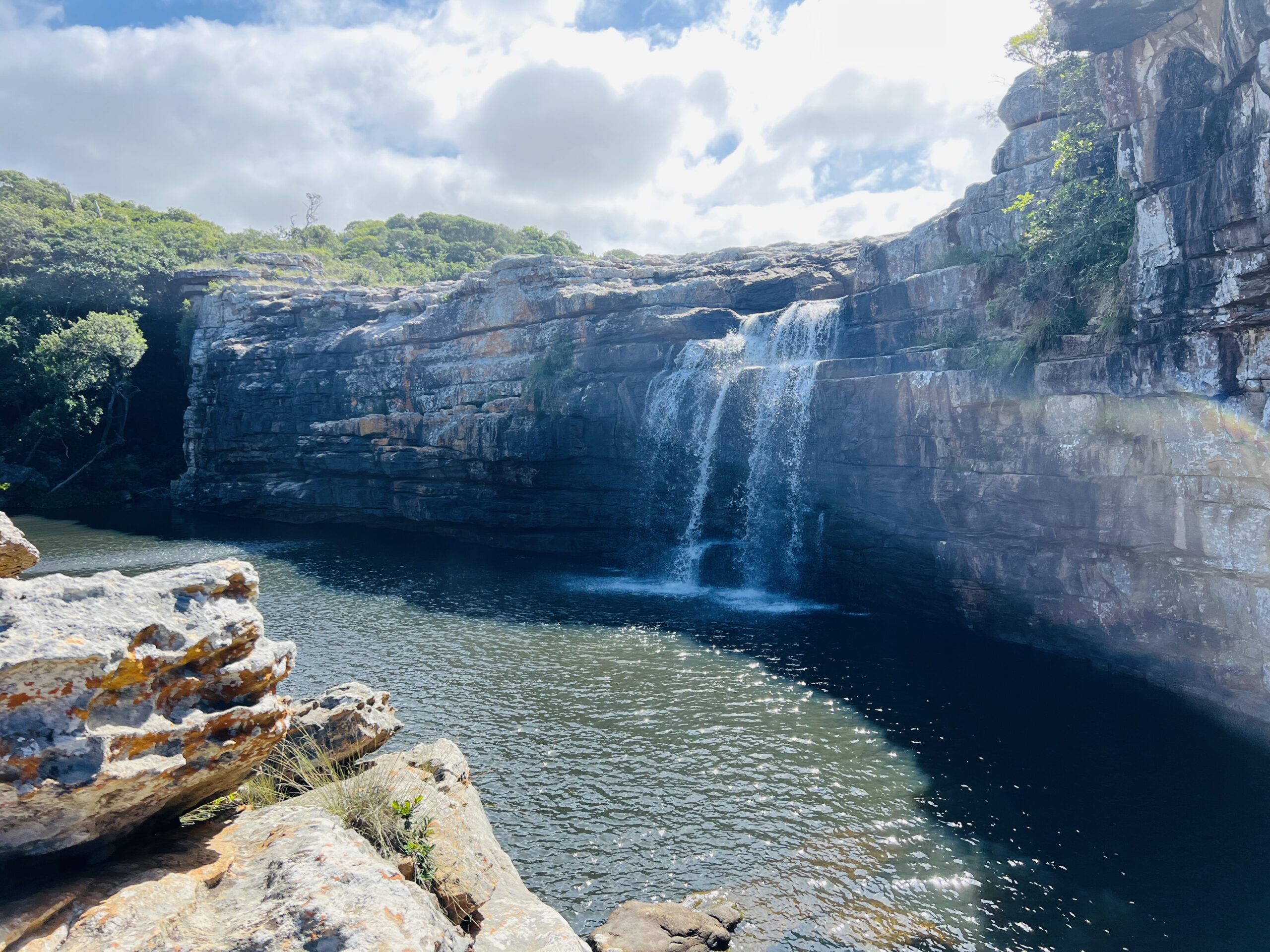
Waterfall in Nyavini
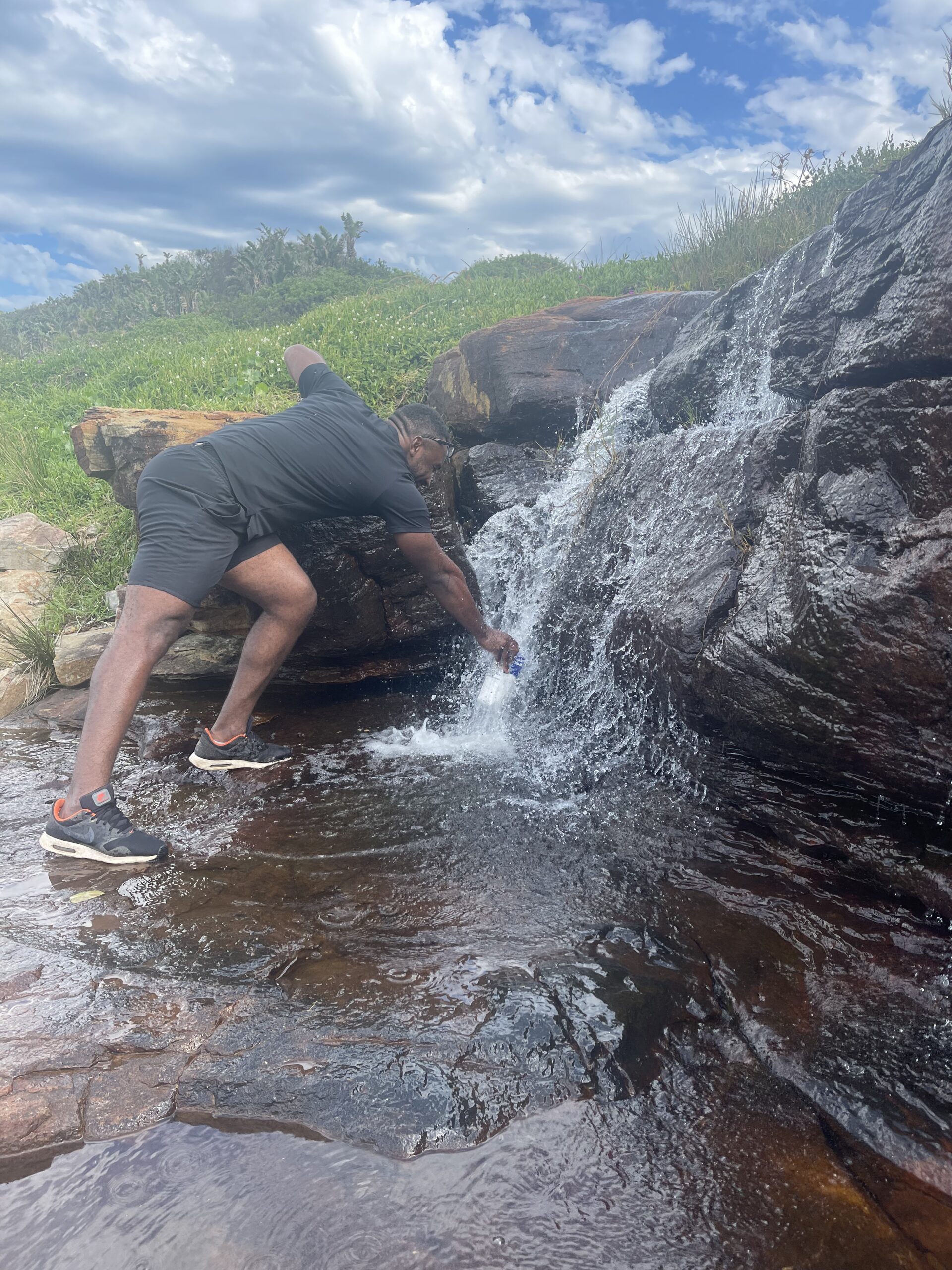
Small waterfall in Nyavini
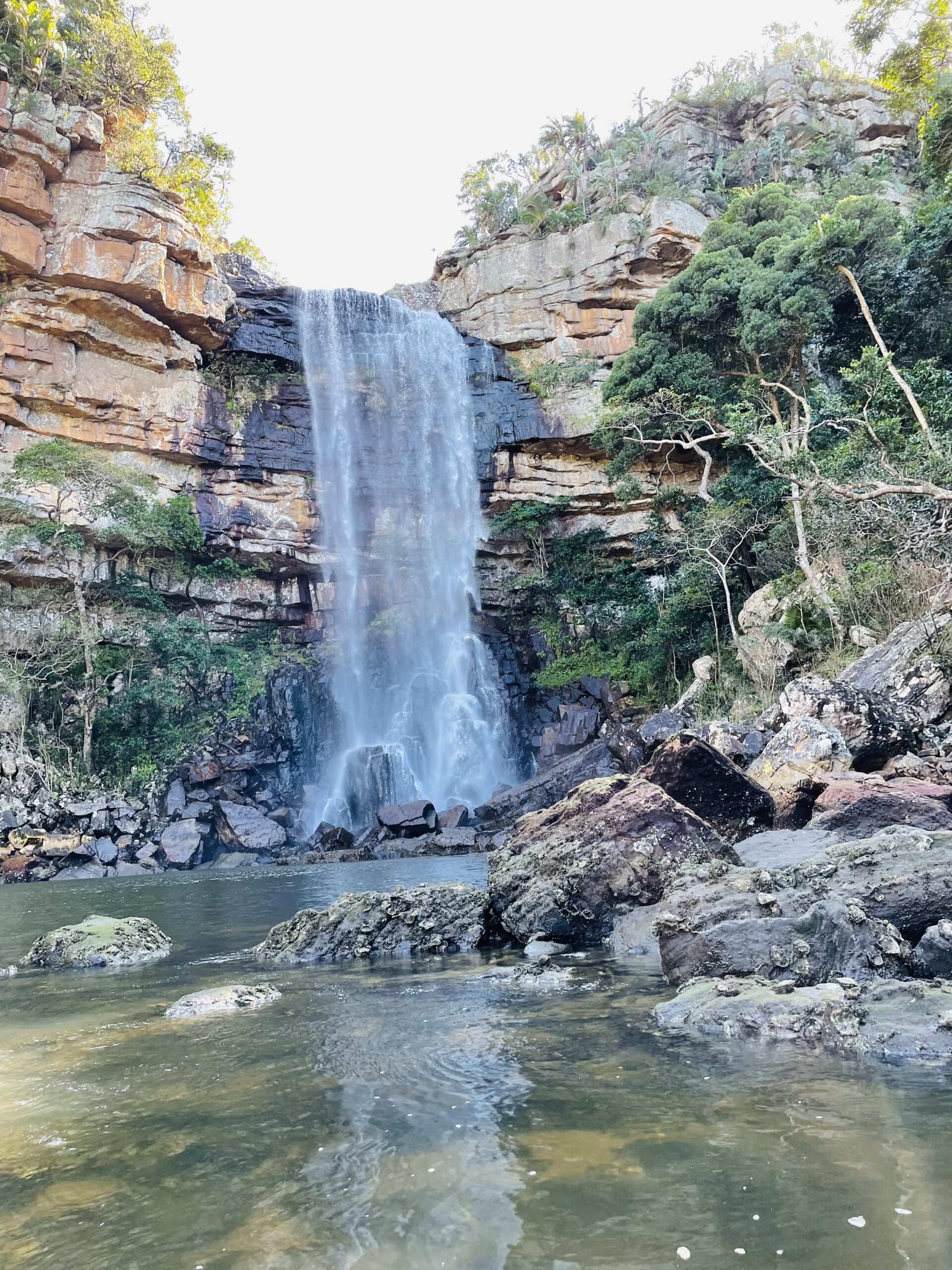
Waterfall on Mtentu river
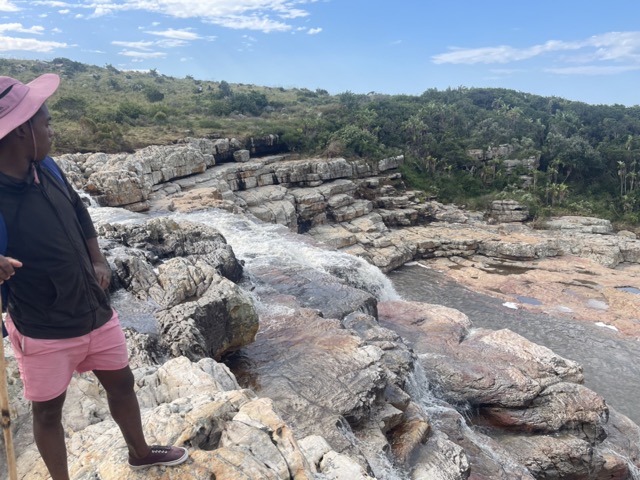
Waterfall in Nyavini
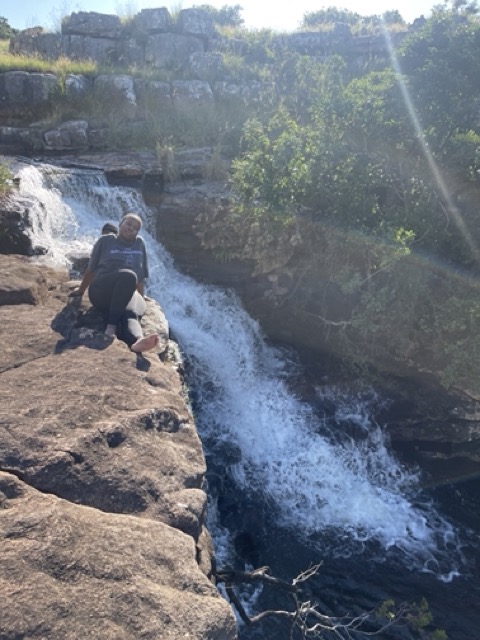
Waterfall in Nyavini
Caves
Nyavini is also home to caves, adding yet another layer to its natural richness. During our first visit, one of the caves was inhabited by monkeys, bringing a lively and almost theatrical atmosphere to the experience. Their presence highlighted the area’s biodiversity and the sense of being in a truly wild, undisturbed environment.
Interestingly, when we returned on our second trip, the cave was noticeably quieter. The monkeys were no longer there, and the silence created a completely different ambiance: calm, mysterious, and reflective. This contrast between visits illustrated the dynamic nature of Nyavini’s ecosystem and reinforced the feeling that the landscape is alive and constantly evolving.
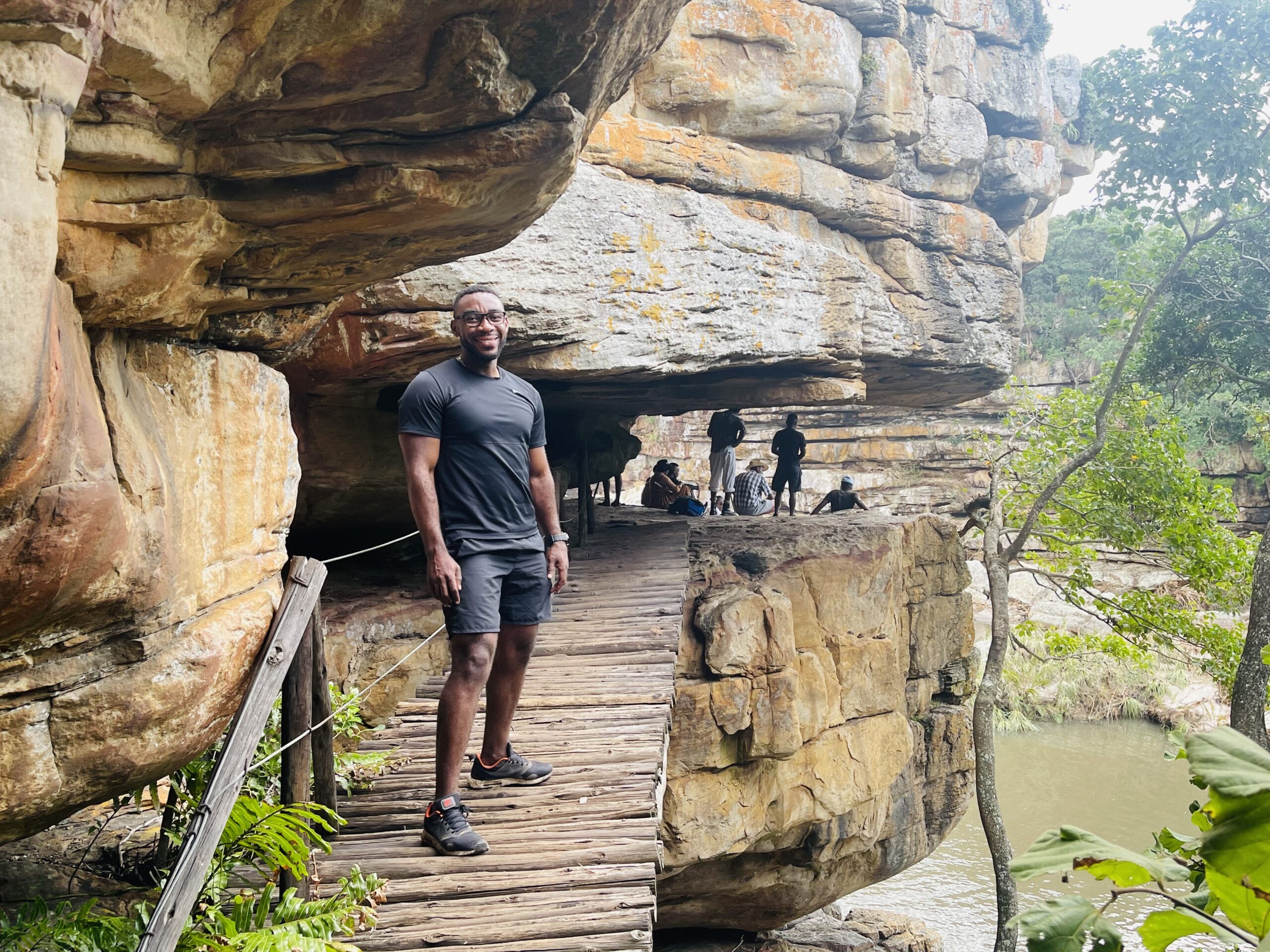
Nyavini’s cave
Mountains
Nyavini is literally perched on a mountain. To reach the sea or the rivers, one must walk downhill, descending along natural paths that gradually reveal the beauty of the landscape below. The journey downward is itself an experience, as each step opens up new views of the surrounding terrain.
These mountains become even more striking when observed from below, near the water streams. Standing by the rivers or at the edge of the ocean, the elevated village and the rolling highlands above create a dramatic and picturesque backdrop. This unique topography not only enhances the scenic appeal of Nyavini but also offers strong potential for hiking, viewpoint experiences, and nature-based tourism.
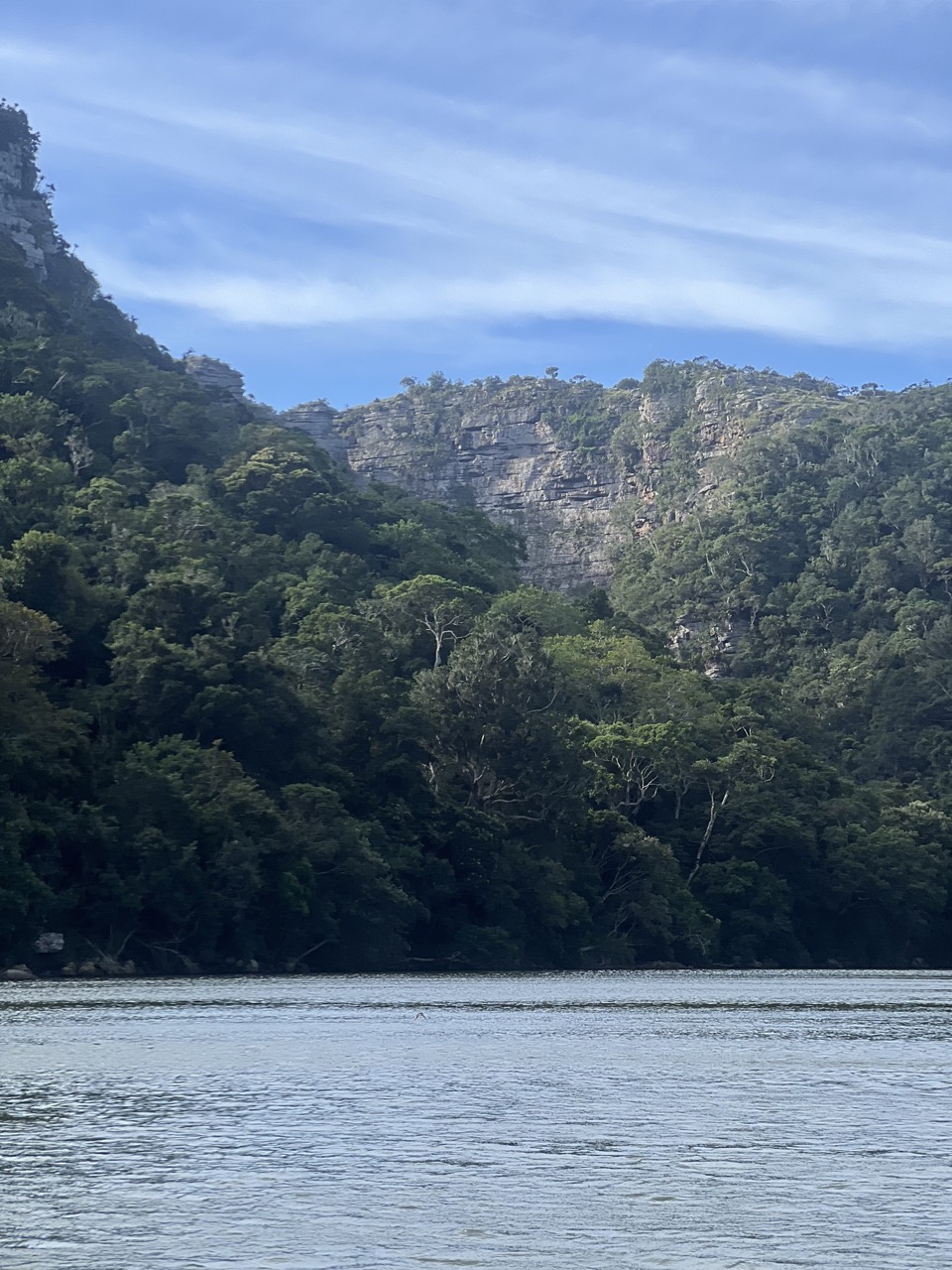
Mountain’s view from the Mtentu River
Geological formation
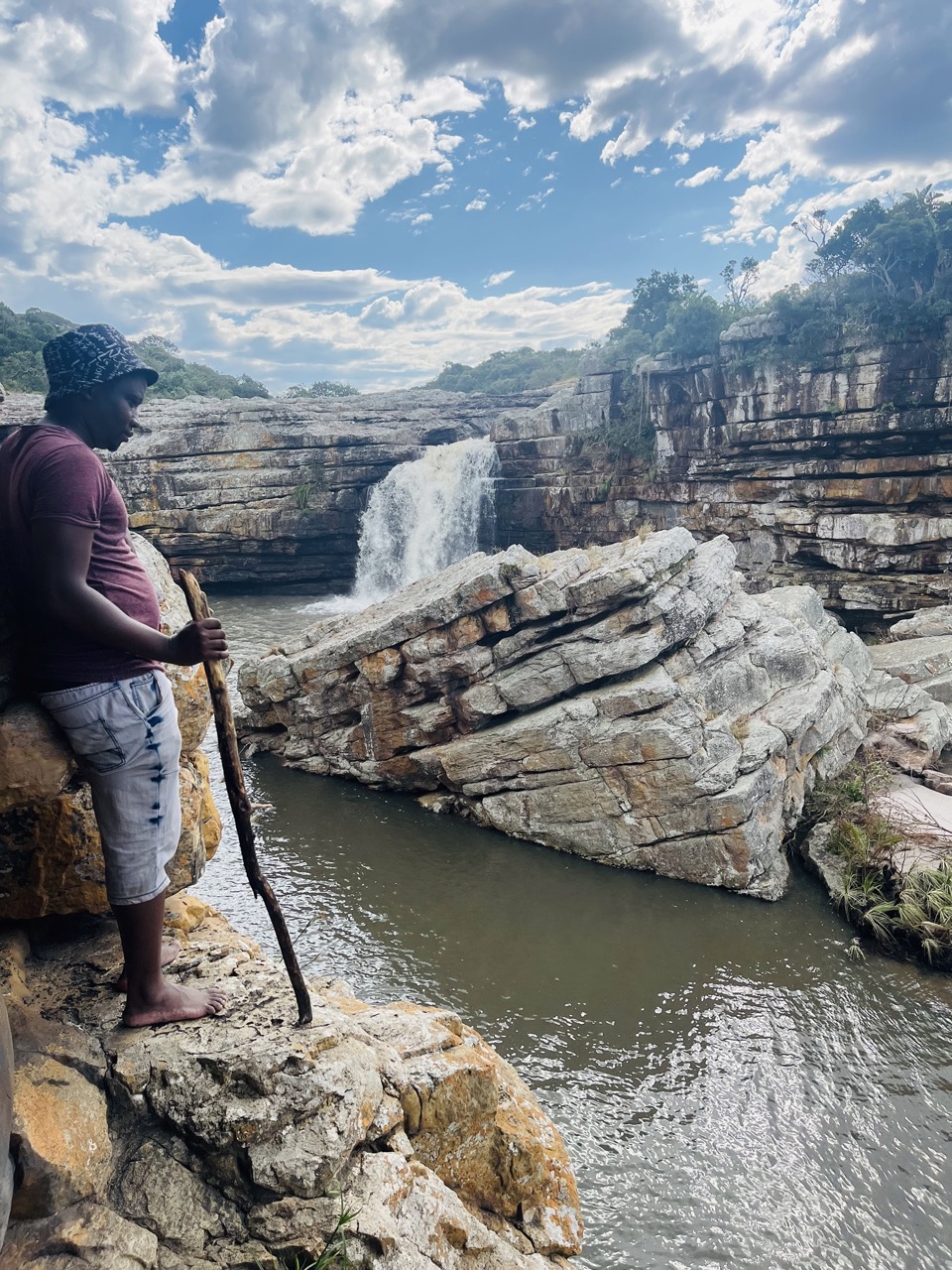
Geological formation
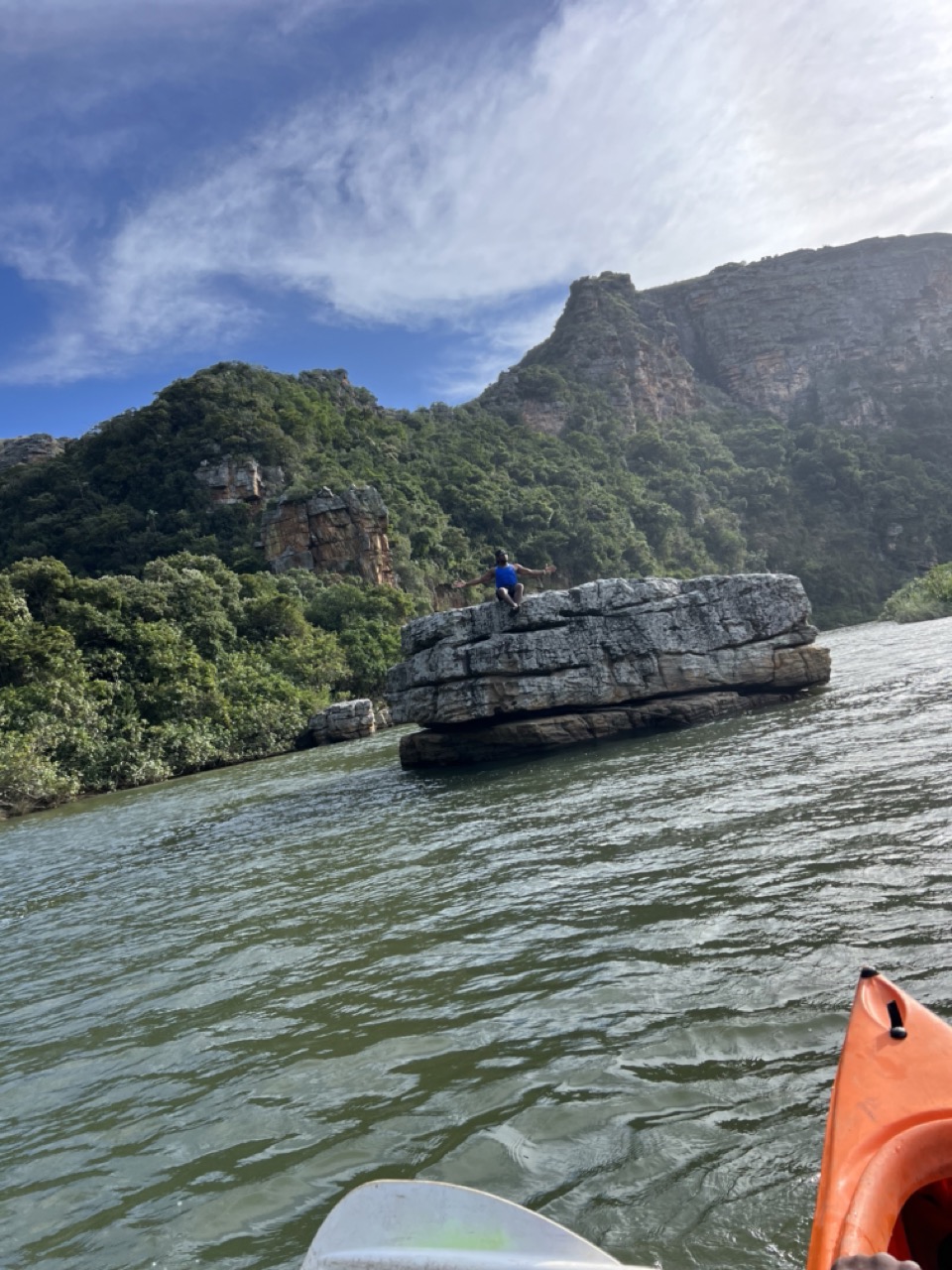
Rock formation in the middle of Mtentu river
Desert
This observation still requires formal confirmation, but we were informed by local residents that there is an area within Nyavini that is considered “desert-like.” The description refers to a large, open stretch of sand with little to no visible vegetation, creating a striking contrast with the surrounding greenery, rivers, and coastal landscape.
Existing tourism assets
Accommodation
Nyavini has Mtentu Lodge, which is an ecolodge that helps to accommodate tourists that visit the area. Alternatively, local residents also propose accommodations and some other services during such as catering to tourists.
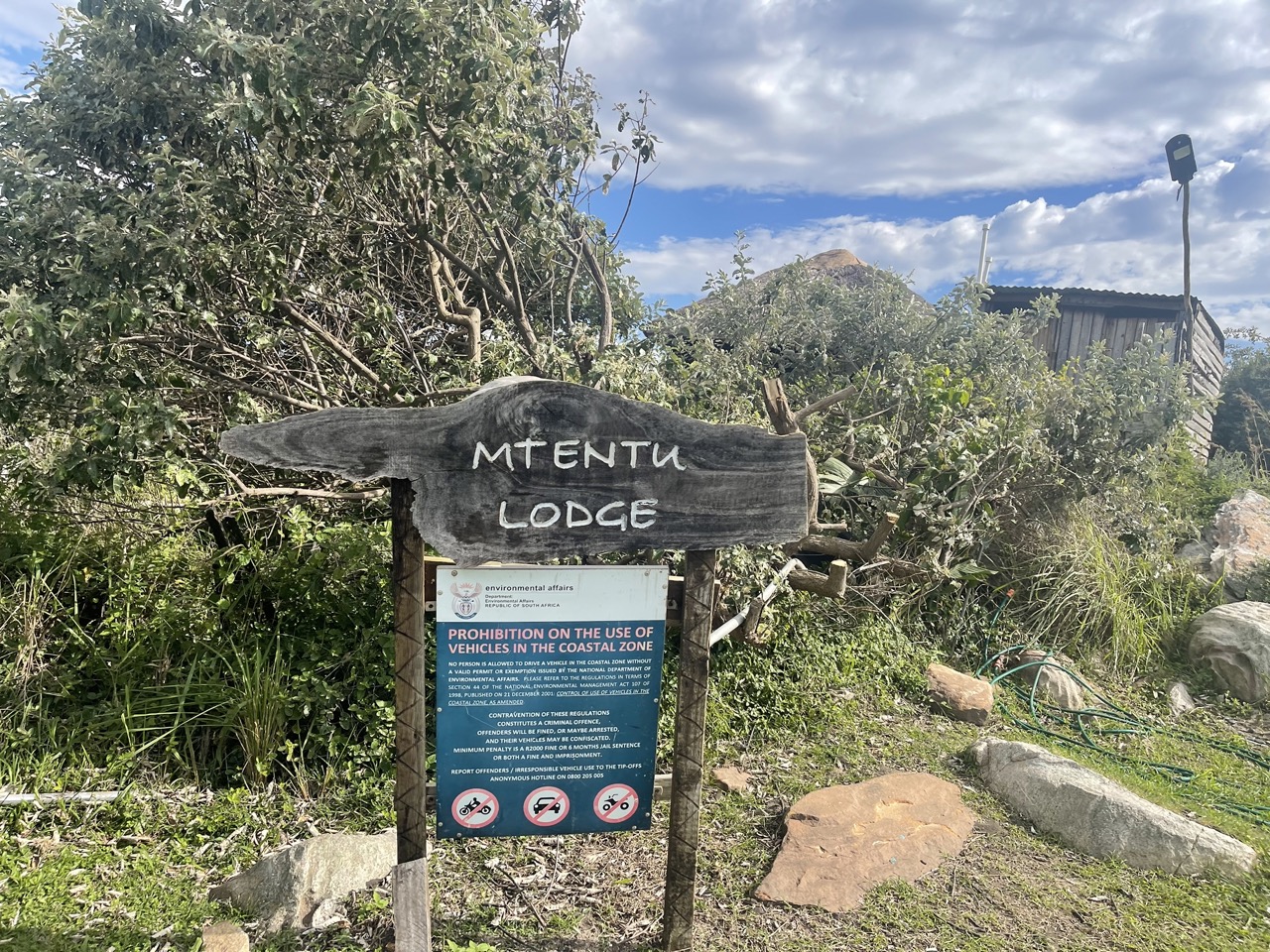
Post indicating Mtentu lodge
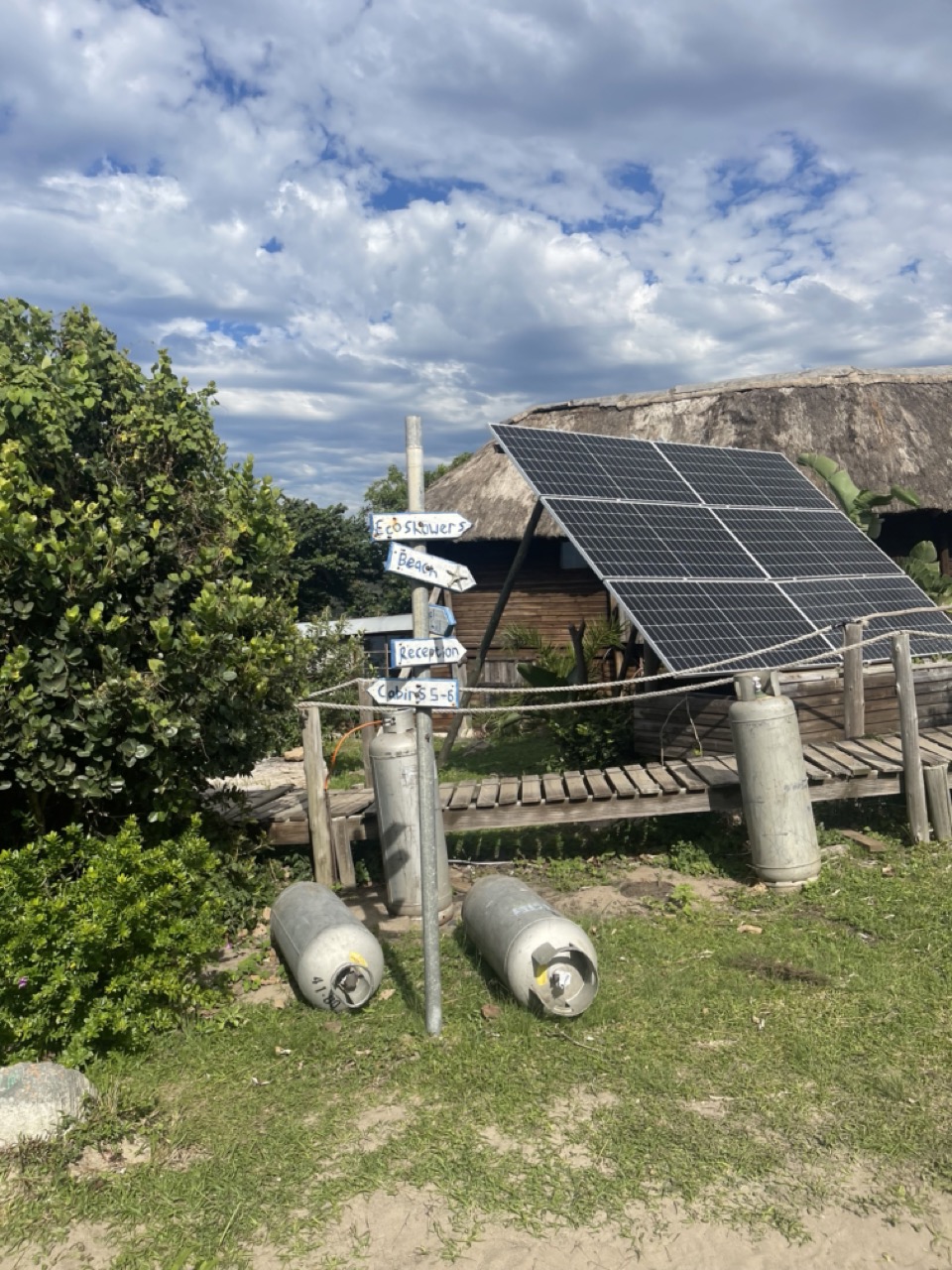
Mtentu lodge
Activities
Some of the activities that can be undertaken in Nyavini include staying, hiking and canoeing. The mountainous terrain and scenic viewpoints make the area ideal for hiking, offering both moderate and more challenging trails with rewarding panoramic views. At the same time, the rivers and estuary provide suitable conditions for canoeing, allowing visitors to explore the landscape from the water while enjoying the tranquility of the natural surroundings.
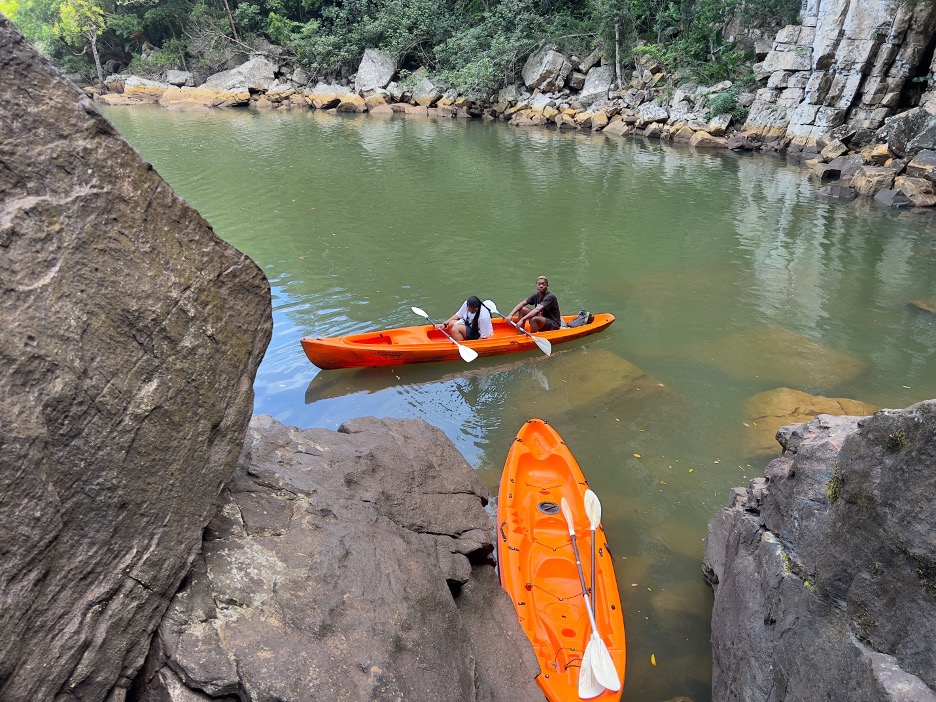
Canoeing
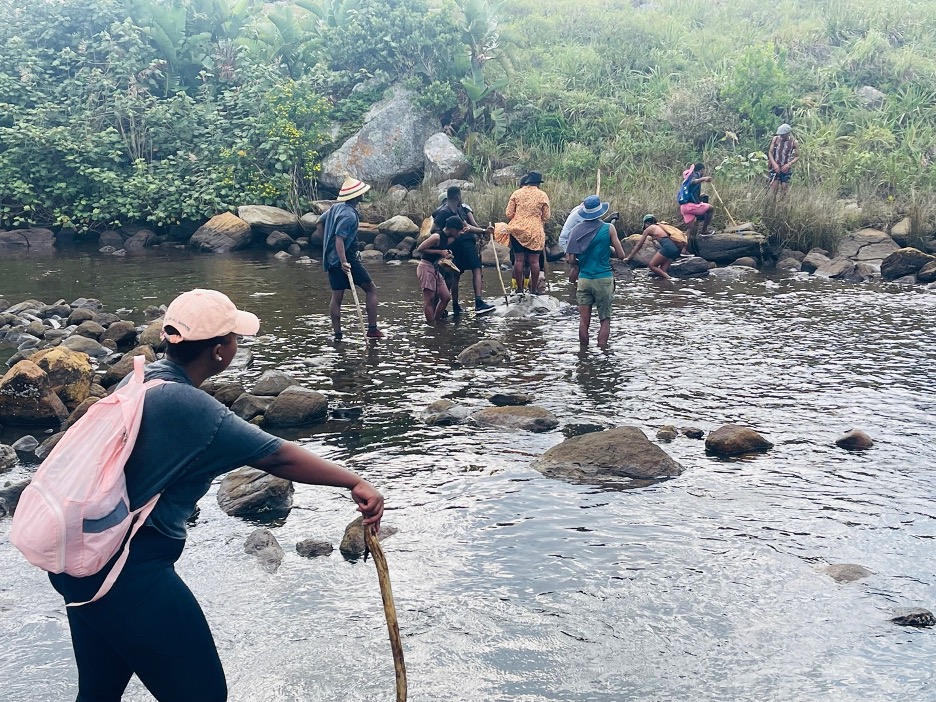
Return from hiking, crossing the river
In conclusion
Nyavini is a destination that offers an authentic and unique ecotourism experience. For those seeking relaxation and leisure in a natural environment, far from urban traffic, noise, and daily pressure, it is an ideal retreat. Away from constant internet connectivity, television, and phone calls, visitors can fully disconnect and reconnect with nature. Surrounded by stunning natural landscapes and rich cultural scenery, Nyavini provides a truly immersive and restorative experience.
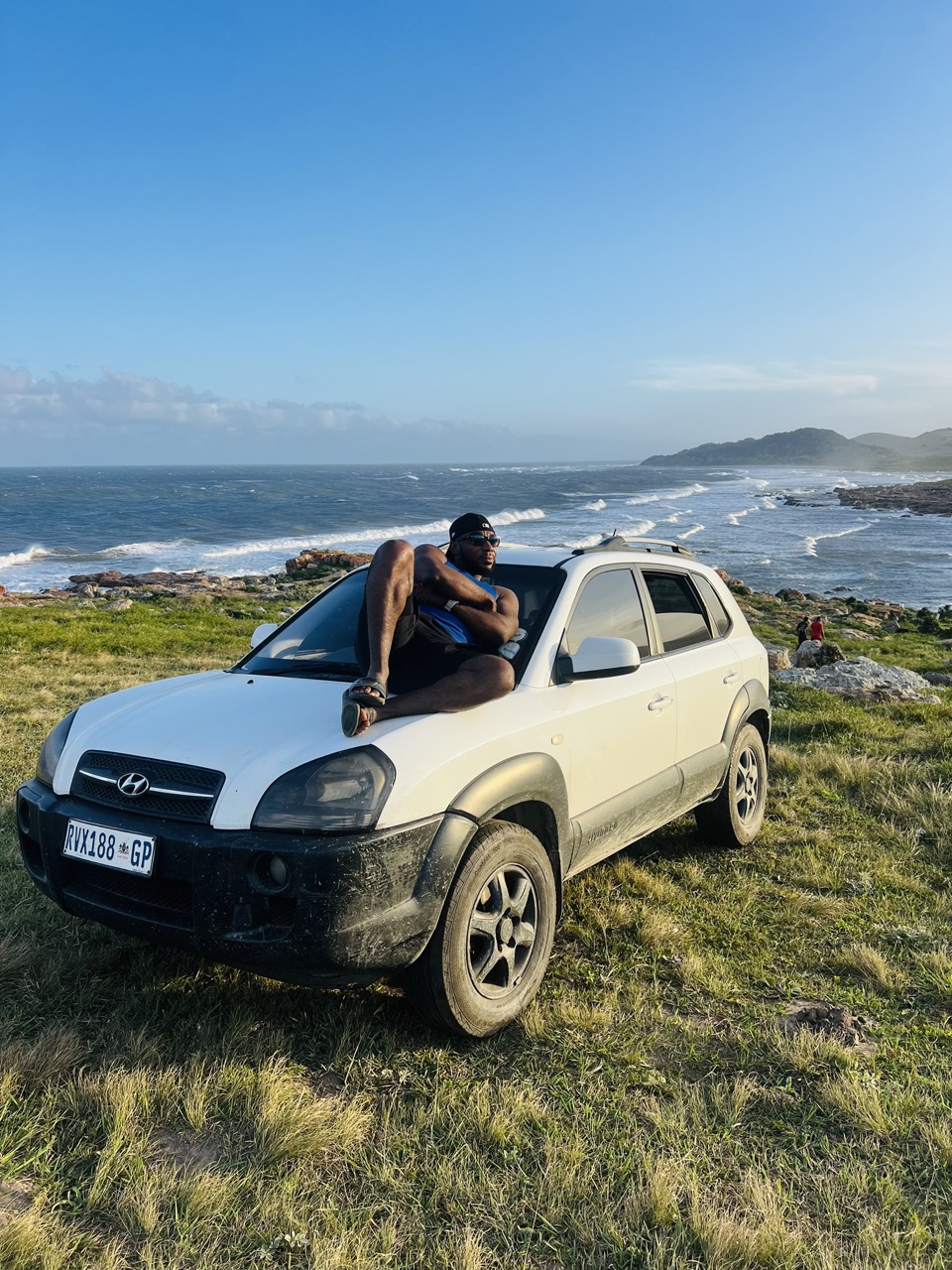
Relaxation by Nyavini’s beach
Nyavini is a site of outstanding value with strong potential to attract UNESCO’s attention and to be recognised as a UNESCO World Heritage Site. Its exceptional natural and cultural significance makes it worthy of international recognition and protection.